 |
Mouse Information
Page |
|
|
|
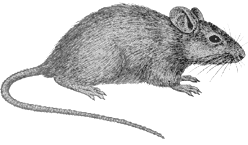 |
Ears: Large in proportion to body Snout: Pointed Weight & Size adult: Approx.3/4-1 oz. / 6-7 inches in length (tip of nose to end of tail) Fur: Silky dusty gray, brown-gray. Droppings: Approximately 1/4 inch long, pointed at both ends. About the size of rice but dark in color. |
|
|
|
| Young mice reach sexual maturity in approx. 1 1/2 months and they will have up to 8 litters per year, with an average litter size of 5-6 young. Mice have a life span of less than 12 months in the wild. Indoors the house mouse generally prefers to live in wall voids, under spaces below cabinets & furniture and under the insulation of basements and attics. Mice are omnivores and will consume the same foods as humans. Mice do not need a daily water sourceas they can metabolize water from the foods they consume. Mice usually live in a teritory of 10-20 feet for this reason it is necessary to make many trap and bait placements to cover an entire house or structure. Mice are nocturnal, with their peak activity at dusk or before dawn.You may see activity during the day when the populations are high. | |
|
|
|
| Control of mice
starts with a
thorough inspection of the exterior rodent entrance ways, harborages
and
the internal and external sources of food. The inspection will
determine
the Integrated Pest Management (IPM) approach that will combine all
efforts
such a exclusion, prevention, sanitation, mechanical and chemical
control
procedures. It is important to eliminate the rodents quickly so the
least
amount of environmental contamination and structural damage will occur.
Harborages: Mice prefer the cover of tail grass, shrubs and leaf litter. It is important to remove accumulated leaf debris from around the structure. Making sure the grass is kept at a low level this will also reduce the amount of mice in and around the structure. Bushes and tree limbs should be trimmed away from the house as to prevent easy access to the roof of the structure. Mice can invade attics where they will feed on seeds and acorns found in the gutters of homes. Be sure to clean the gutters regularly. Store firewood away from the structure and keep the firewood off the ground where possible. Entrance ways: A young mouse can pass through an opening the size of a dime! It is important to inspect for these openings around doorways, garage doors, pipe openings and vent pipe openings. Holes can be sealed temporarily with steal or copper wool or with foam and silicon caulking. A more permanent solution wood be to cement openings where possible or repair the area with wood, siding or sheet metal where applicable. Don't forget to inspect the bottom of the doorways and install metal door sweeps as necessary. Food sources: Mice or omnivores and will consume seeds, grains and nuts as well as insects, slugs and worms outdoors. Indoors they feed on dried pet foods, cereals, chocolate, candy and all grains & seeds including grass seeds. Common outdoor sources of food are bird feeders, vegetable gardens, trash containers, pet foods and barbecues. Indoors they will invade pantries, pet bowls, stored bird and grass seeds in garages and basements. Control options: There are several baits and devices that are used to eliminate mice. Some of which are snap traps, glueboards and rodent bait blocks. Always place rodent control devices against walls in areas of activity. Allow some time for the rodent to get used to these new objects. Make sure the traps are perpendicular to the wall with the trigger against the wall. Some favorite baits for rat snap traps are peanut butter, bacon, cheese or cotton balls for nesting material. You can use dental floss to help keep the bait on the trap. When using rodenticide baits be absolutely sure that the bait can not be accessed by children or pets. Professional pest control operators use tamper-resistant boxes to contain the baits. Additionally these boxes are anchored to the ground or structure with a cable. |
|
1800/427-0002
Copyright © 2004 Eliminex Pest Control Inc.