
Termite queens pulsate for two reasons: to regulate their temperature and to produce vibrations that communicate with their mates. Pulsating helps the queens to thermoregulate their body temperature, which is important for their reproduction. The queens also produce vibrations that communicate with their mates, which helps them to find each other and to mate.
The queen, a termite’s queen, lays eggs to support the colony’s growth and survival. A subterranean termite queen’s color range can range from pale yellow-brown to black. The number of workers (the colony size) increases as the secondary queens lay eggs. A winged termites’s first step toward forming a new colony is to locate a nest and hollow it out. Queen termites are the oldest of the termite species and can live for decades. Termite queens can live for up to 50 years and can produce eggs for up to ten years at a time.
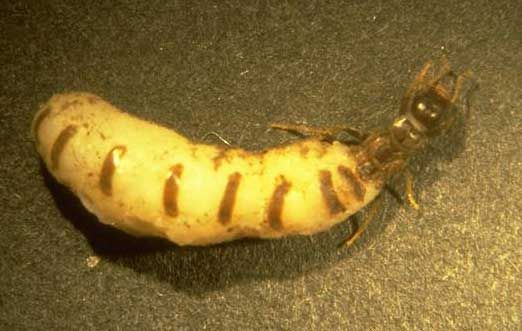
Termite queens have enormous bellies because they have terrible disfiguring abdomens that allow them to pump out enormous amounts of eggs. Termite workers typically measure a few millimeters in length, whereas a queen can measure as long as four inches. She is essentially a pulsating, immobile egg sac with a head that moves around in a static position.
Her reproductives are the male termites, who fertilize her eggs, and you should look for them. Workers are generally yellow, whereas reproductives are light in color: workers are a little smaller, and reproductives are a little lighter in color.
Did termite queens eat wood? Termite queens are fed by their workers. Workers break out of the colony and feed on wood, resulting in cellulose, which is used in the construction of insulation. In order for the queen to eat the cellulose, it must be returned to the colony.
Termite queens have long lifespans because their antioxidant system is efficient, indicating that they are protected from environmental factors that could shorten their lives. A mutation that causes oxidative stress-induced DNA damage in the germline may affect the offspring if it is not removed.

Secondary reproductives can be produced if the queen dies, and blocking pheromone production stops after the queen dies. There may be many more secondary reproductive queens than the queen and king in the Reticulitermes species, causing the colony to grow larger.
Termite colonies are usually formed by termite queens living in dome-shaped structures made of dirt, wood, or paper. In order for a colony of termites to thrive, it must have a queen. If the queen termite dies without another termite taking over, the colony will vanish and eventually die out. While new termite control methods, such as the use of ants, are less lethal, they continue to be difficult to eliminate the queen. The presence of queen termites suppresses the growth of other queens by releasing pheromones that repel them. Because of her actions, killing the queen is difficult. If you trap the queen termite, it may never try to break through the trap.
As termites mature, the queen gives them more room to swarm out and reproduce. Hundreds of termites swarm to the nest, but most colonies do not find a mate and are unable to build new colonies. If termites swarm around your house, it’s possible that a new colony is forming.
Termites are social insects because they are born into colonies and live and work together. The number of termites in a colony can be quite large, and this can range from tens of thousands to hundreds of thousands. The queen digs into the ground with powerful burrows in order to build colonies. She leaves behind a series of galleries and chambers where the workers live while making these tunnels. The queen is primarily responsible for providing food for the young termites and laying eggs. This is accomplished by feeding her food that she has gathered from the wood that she has been eating. As a colony grows, so does the queen’s need for more room to live and lay eggs. As a result, she is building new chambers and galleries. Termites, for example, can build their homes completely out of the ground. A snake can break down wood with its powerful claws and jaws, then glue it together by injecting saliva into the wound. Termites, which aid in the breakdown of hardwood trees, play an important role in the environment. Wood would become so hard if termites were not present that it would be impossible to build houses or other structures. If you live in an area that has a lot of termites, you should avoid bringing them into your home. If you place termites in your home, it may be damaged. In addition to wood beams, there are wood floors throughout your home. It is best to call a professional if you see termites in your yard.
Termites can live without a queen, but they must rely on secondary reproductives, which are usually shorter-lived. Termite queens typically have a lifespan of 20 years or more.
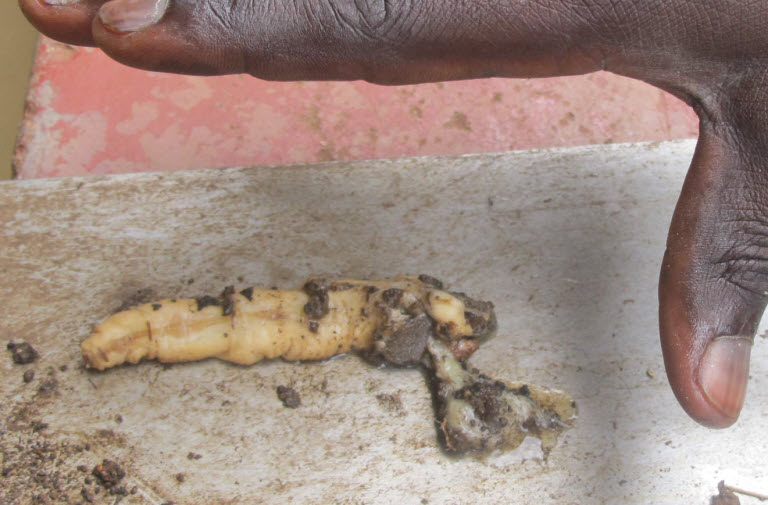
Termite queens typically stand between 4 and 6 inches tall, or slightly larger than the average size of termite workers in general. Termite queens, which are larger than humans, cannot move freely and must rely heavily on worker termites for assistance.
Every year, termites cause $5 billion in property damage in the United States. Queen determine the size, makeup, and division of each termite colony. In termite colonies, she is a primary egg layer. Queen termites are known to suppress the growth of other queens by injecting pheromones into them. She may decide to allow many of the nymphs to develop into alates (winged reproductive adult termites) after three to five years of feeding (winged reproductive adult termites can survive for up to 100 years). When an adult termites emerges from the nest, he or she attempts to establish a new colony. Only trained professionals can provide effective termite control.
Termites, in addition to being known for their spectacular and intricate mounds, are also known as reproductive queens. This queen, who can grow to be 6 inches long, is the most powerful in the colony. The queen’s body is mostly black, with a shiny golden head and antennae.
Termite queens lay their eggs as the only reproducing termites in a colony and will eventually become the next generation.
Termite queens are as diverse as the number of eggs they produce. A termite queen’s average length ranges from 4 to 6 inches, or slightly larger than the average size of termite workers as a whole. Her job is to lay eggs, which will become the next generation of termites because she is the only reproducing queen in the colony.
Termite queens are quite large, with large abdomens that enable them to pump out an abundance of eggs.
It is the process of giving birth. The termite queen lays 30,000 eggs per day on average. That’s a total of 10,950,000 eggs eaten per year. In fact, assuming that termite queens live for as long as 20 years, an insect can create approximately 219,000,000 eggs.
Termites are among the most fascinating creatures. Their colonies are dependable because they are hard workers and can build structures such as pyramids and tunnels. What are the procedures of the making of a baby? Termite eggs are produced by a variety of creatures, including termites. termite queens produce 30,000 eggs per day on average, with one egg being produced every three seconds. Every year, over 10 million eggs are produced. The majority of termite species, including R. speratus, have colonies that are typically built by one king and one queen (also Matsuura and Nishida 2001, Matsuura and Nishida 2001, Matsuura and Nishida 2001, Matsuura and Nishida 2001, Matsuura and Nishida 2001, A queen lays eggs in a brood chamber while on the throne. After a few days, the eggs hatch into larva. The larva spends time in the brood chamber before becoming adults. Although termites are not as large as humans, they play an important role. They not only aid in the construction of structures such as pyramids and tunnels, but they also consume wood. Termites are important in the genetics process because they aid in the expansion of a colony. Termites are incredible creatures that can lay a lot of eggs in a short period of time. As you can see, these eggs are critical in the process of establishing new colonies.
Termites, as one of the world’s most fascinating creatures, are abundant. They are not only capable of building extremely intricate structures, but they are also capable of changing their behavior, diet, and even size over time. Termites are insect that build up the structure of a termite mound, which is an important component of the ecology of a termite’s environment. Termites are able to lay eggs quickly, which allows them to quickly spread their species. As a result, queens can lay up to 12 eggs in a short period of time, which can lead to a rapid colony growth. In addition to the fact that a queen termite’s body can deviate significantly as she lays eggs, she is much larger than a standard termite. Queen expansion is a lengthy process that takes about 15 years to complete. When the eggs hatch, the nymphs that emerge are mostly larger and develop more quickly. Its antennae are straight, and if you look closely, you can see them. It is common for nymph wings to be pale white. In the process of maturing, they gain the name termites. They will be able to help the colony by remaining indistinguishable from regular termites at this point. Secondary or tertiary reproductive cells can produce offspring in some cases. It is important to note that while the queen is the primary reproductive unit in a colony of termites, other members of the colony can also play an important role in the colony’s development and survival.
A termite nest can have anywhere from several hundred to several million queens, depending on the species of termite. Some nests have been found with over a million queens.
The termite colony contains multiple primary queens (Nasutitermes corniger) (Isoptera: Termitidae) among its termites, which are monogynous. The issue was addressed by Andrews Engineer Arthur A. on September 13, 1911. The termites can be found in Jamaica. Batra, S., is credited with discovering that sugar can be beneficial to health. The behavior of the social bee, Lasioglossum hymenoptera, within its nest (Hymenoptera: Halictid*), is described below. Termites, for example, are known as black-mound termites in the Cape, and a termite known as Amitermes atlanticus is known as a termite in the Termitidae.
Don’t be afraid to look for termites in your neighborhood. It’s very likely you’re seeing the queen and her army of termites. Termites with a large, white abdomen are a slow-moving pest. That’s how I think of her. Pick her up. Your victory against termites should serve as a wake-up call.
There are a few reasons why termite queens are so big. One reason is that they need to be able to lay a lot of eggs. A queen can lay up to 30,000 eggs a day, so she needs to be big enough to accommodate all of those eggs. Another reason is that she needs to be big enough to store enough food to last her and her offspring through the winter.
Termites, which are social insects that can divide a colony into three different castes, play an important role in society. Termite queens, along with the king and alates, are said to be the primary reproductive mechanisms of termite colonies. Queen termites are easily distinguished from other termite castes by their size and the role they play in termite colonies. Termite queens, depending on their species, can live for up to 20 years. Termite queens who build nests in a relatively small area have a shorter lifespan than other types of termites. Every termite nest contains a central room where a termite queen lays her eggs. The queen’s body is guarded by a skilled workforce who put in a lot of effort to keep her alive. To effectively control termites, you must eliminate the colony, including the termite queen. Rentokil Pest Control has been in termite control for over 50 years across Indonesia.
Termites are insects that live underground and form subterranean nests. Termite queens are the largest members of the species Macrotermes bellicosus, which can grow to be up to 10 centimetres (4 inches) long. According to popular belief, termite colonies are typically made up of only one queen. Termites that live on worker farms are commonly seen crawling because they are looking for food. There can be more than one queen in a termite colony, but all members of the association were approximately the same size and weight. Polygynous colonies are thought to be formed in some cases by budding of a parent nest and queening by multiple sibs from the parental colony (multiple adultoid reproductives).
A termite queen can live for many years, sometimes up to 20 years. In a colony, a termite queen can lay thousands of eggs each year.
As the queen termite grows older, she becomes less active in feeding and more active in reproduction. She may lay as many as 30,000 eggs in a day. The eggs are white and oval-shaped. They are deposited in groups of 20 to 30 in special chambers called oothecae.
According to an unbelievable fact shared on Facebook, termite queens lay more than a hundred million eggs per year. Termite Queen laid millions of eggs as recorded in a National Geographic video. A termite queen can lay up to 30,000 eggs per day, 10,950,000 eggs per year, and 164,250,000 eggs per lifetime. Termite queens lay 20,000 eggs per day, with a chance of living for up to 20 years. More than 1,000 termite species can be found in Africa, with around 2,500 termite species found globally. By rating information as false, edited, or partially false, you can help Facebook detect false information.
Termites live in colonies, which is equivalent to being a social insect. The maximum number of colonies is one queen, one king, and one or more alates (termite swarmers). In most cases, the queen and king are the primary reproductive units. Other termite caste members can be secondary reproductives, but only lay eggs and do not produce offspring. Their juveniles do not produce eggs, but tertiary reproductives do.
Eating termites before sex, according to a Malaysian man, may improve sexual prowess. Abdul Rahim Abu Bakar, an insect control expert who specializes in termite control, claimed that queen termites have special qualities similar to Viagra, reports Star Online.
termites have a reputation for being popular in edible insect-friendly areas of the world, and the taste of them is widely accepted. Queen termites are not typically considered edible insects, despite their name. They are extremely difficult to find, which is one of the reasons for this. The termite queen is regarded as an unfit food by a large number of African cultures, especially when it is consumed in special circumstances. Because the queen is so large, the food is particularly nutritious and is ideal for sick or malnourished people. These termites are devoured for their meat in countries such as Senegal, Benin, and Zimbabwe.
Termites, as a vegetarian diet, can provide us with a nutritious, tasty, and insect-free diet. They are also used in traditional medicine to treat a wide range of diseases. In traditional popular medicine, termites are one of the most common insects. It is still unclear what the health benefits of eating termites are, but termites are thought to be effective against a variety of illnesses. Eating termites, on the other hand, can expose you to a number of health risks, including parasitic infections and infections from food.
There’s an old story about a termite queen who was so big, she could barely move. Every day, she would lay thousands of eggs and then just sit there, getting fatter and fatter. The other termites would bring her food and she would just keep eating and laying eggs. One day, she got so big she couldn’t move at all. She just lay there, surrounded by her eggs, until she died.
The queen is also the mother of all mothers, and she is the queen’s boss, as well as the chief reproduction officer. Her abdomen can be as long as four inches and as wide as an index finger. A queen can produce thousands of eggs per day, as well as up to 9 million eggs in her lifetime. The queen of a termite colony is known for her ability to produce eggs for the colony. When the weather is ideal, the queen produces alates (winged offspring), allowing the colony to form new colonies. In order to avoid problems, let professional contractors handle the task.
Termite queens provide eggs for termites to lay, which aid in the development of new termites in a colony. Because these pests can live for up to 50 years, you should keep an eye on your colony at all times to ensure that the queen is healthy and lays eggs.
Subterranean termite queens are the primary reproductive individuals in a termite colony. They are usually larger in size than the other termites in the colony, and their primary role is to lay eggs. The queen typically mates with a small number of males, and the resulting eggs are cared for by the other members of the colony. The colony itself is typically located underground, and the queen is responsible for leading the other termites to food sources.
It is possible in many species of termites, including subterranean termites, to replace the primary king and queen by neotenic reproduction from workers or nymphs within the colony. Reticulitermes speratus, a Japanese termite species, was the first to be described with asexual queen succession. Two classes of molecular genetic markers were used to study the breeding systems of sympatric subterranean termites (Reticulitermes flavipes and R. hageni) in central North Carolina. Polymorphism is present at trinucleotide microsatellite loci in the subterranean termites Reticuliterme flavipes. A PCR-RFLP study of southern central United States termite populations was conducted in 2003 to identify them. In a book published in 96, 154, and 1495. Parthenogenesis in termites of the genus Zootermopsis (Isoptera) is studied by using the mitochondria cytochrome oxidase II gene.
We examine the ratio of males to females in the primary reproductives of Biftermesietta bee (Gardner), the timing of parthenogenesis, ovarian development, and oviposition behavior. Termites in the Humid Tropics: Proc. of the New Delhi Sym., 13 p.