

 Eliminex pest Control Inc. is dedicated to environmentally responsible pest control practices. Our seasoned professionals use extreme caution around your family and property while insuring positive results. See More
 The commercial marketplace is where our pest control technicians experience and expertise shines through. Eliminex Pest Control technicians have the necessary knowledge, desire and pride to do the job right the first time!
 See More
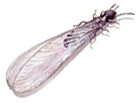 Our termite control division utilizes every tool necessary to eliminate termites from your house and property. By employing the latest baiting techniques we complete the job with little impact on the environment.
See More

Bed Bugs are back with a vengeance! It takes a professional company with extensive experience to eliminate these pests from your home. Eliminex Pest Control uses every tool at our disposal to rid your property of these annoying pests.
See More
Cockroach Biology and Control
Cockroach infestations can be an annoying
and frustrating health hazard!
Cockroaches and there droppings can contaminate your home or business environment. It has been scientifically confirmed that cockroaches transfer harmful bacterias such as salmonella and e. coli to food processing surfaces and exposed food. Cockroach droppings and their cast skins can also trigger allergy and asthma symptoms in people who suffer from respiratory allergies.
Controlling cockroach infestations can be very difficult to eliminate on your own. Eliminex Pest Control Inc. offers a variety of proven cockroach control programs that include one-time services with a guarantee or a maintenance plan that provides ongoing protection of your home or business. Eliminex pest control personnel practice integrated pest management (IPM) strategies that eliminate your cockroach problems quickly with a minimal use of insecticides.
German Cockroaches | Oriental Cockroaches
American Cockroaches | Brown Banded Cockroaches
German Cockroaches (Blattella germanica) are by far the most common cockroach encountered by people in the Northeast United states. These opportunists readily co-exist within every human environment. German cockroaches are the most common cockroach found in restaurants, hospitality and food processing environments.
Adult German cockroaches are approximately 1/2 to 5/8 inches long and are light brown to brown in color. Their most distinguishing characteristic is the prominent dark brown racing stripes seen on their upper thorax. The female carries her eggs in an egg case known as an ootheca. An egg case typically contains 30 to 40 eggs. The egg case is a tiny, brown, purse-shaped capsule that is carried by the female until just before hatching. Nymphs will often hatch from the ootheca while the female is still carrying it. Nymphs are similar in appearance to the adults except that they are smaller and lack wings.
Oriental Cockroaches
The Oriental cockroach, (Blatta orientalis) is also referred to as a "water bug" because of its tendency to harbor in damp locations such as sewers and drains. Oriental cockroaches are approximately 1 inch long and vary in color from dark brown to black. Males have wings covering 3/4 of their body, and the female has very short (rudimentary) wings. Both the male and female are flightless.
A female oriental cockroach produces an average of eight egg capsules in her lifetime. Each egg capsule or ootheca contains about 16 eggs. Unlike the German cockroach, the Oriental cockroach deposits her egg capsule in a warm sheltered environment where food is readily available. The incubation period for the oriental cockroach is about 40 to 80 days depending upon temperature. The female gives no assistance to the young. Nymphs go through several molts before becoming adults which takes approximately one year.
The American Cockroach, (Periplaneta americana), is also known as the Palmetto bug or water bug. This is a large cockroach with the body ranging in length from approximately 1 to 1-1/2 inches long. The antennae extending from the head are equally as long as the body. The adult is a shiny reddish brown to dark brown and has a yellow margin on the pronotum (the region directly behind the head). Immature American cockroaches (nymphs) are also reddish brown to dark brown in color. Large nymphs often have yellow markings on the abdomen.
Adult American cockroaches have wings but are awkward fliers. Male cockroaches have an additional set of appendages on their abdomens called styli, which is the best way to distinguish the male from female. Immature American cockroach nymphs resemble adults however they are smaller and wingless. The American cockroach egg capsules are dark brown and about 1/3 inch long. The egg capsules resemble small ridged purses that are deposited in favorable environments and are not carried by the female till maturation. Immature cockroaches emerge from egg cases in 6 to 8 weeks and require 6 to 12 months to mature. Adult cockroaches can live up to one year, during which females produce an average of 150 young.
In southern states American cockroaches are found in moist shady areas outdoors such as hollow trees, wood piles, mulch and are occasionally seen under roof shingles or in attics. In northern climates these cockroaches are often found in dark, damp areas such as basements, crawl spaces and in drain and sewer lines.
The Brown Banded Cockroach (Supella longipalpa) As the name implies, the Brown banded cockroach gets its name from the two lighter bands that cross their darkish brown bodies. Brown-banded cockroaches are slightly larger than German cockroaches and are about 5/8 of an inch in length. The males of this species have full wings, which reach beyond the tip of their pointed abdomens. Females have underdeveloped wings, much shorter than their broad, more rounded abdomens. The lighter band markings are much more distinct in nymphs than in adults of either sex. Male brown banded cockroaches have been observed to fly indoors.
Brown banded cockroaches often hide their egg cases in or under furniture. Within a room, these roaches tend to prefer warmer, drier, and higher locations than do any of the other urban pest roaches. They are often found in upper cabinets or in other rooms than the kitchens (food preparation areas) or bathrooms.
Female egg cases contain between 13-18 eggs per egg case known as an ootheca. Brand banded cockroaches do not carry their egg capsules, instead they glue their capsules to items such as furniture, drawers, cabinets and wall voids. The average female lives for about six months and can lay up to 14 egg cases. They require less water for their survival than German cockroaches.
The brown-banded cockroach has a fairly wide distribution however they are not commonly found in structures in the Northeast. They are usually found in multi-family dwellings that have residents that came from more southern states. Brown banded cockroaches prefer warm and dry locations, such as behind picture frames, refrigerator motor housings, cabinets, pantries, closets, dressers, and furniture in general.
The Pennsylvania Wood Cockroach (Parcoblatta pensylvanica) Adult Pennsylvania wood cockroach males measure about 7/8 to 1 1/8 inch long and the adult females range from a 1/2 to 3/4 inch long. The adult male Pennsylvania wood roach is a slender, brown cockroach with a white edge on the segment behind the head. The male is fully winged and a good flier that is attracted to light. The female's wings are reduced, covering only about 2/3 of the abdomen and cannot fly. Nymphal instars are light reddish-brown to grayish-brown.
The Pennsylvania wood cockroach is an outdoor species and usually does not breed indoors. Outdoors they have been found under mulch, in fire wood and inside tree hole. Home owners in the Northeast usually encounter these cockroaches during the months of June and early July when the males are attracted to lights on structures. Typically you will find them in around the entrance ways of homes or businesses. They are often confused with the more invasive species German cockroaches.
Preventative and exclusion control measures are what is necessary as this pest does not breed indoors. This involves sealing and caulking exterior cracks and crevices, making sure all windows have tight fitting screens and all doors should have a door sweep. Exterior vents or vent openings should be tightly screened. Changing white incandescent bulbs to yellow bulbs around entrance doors may be helpful.
Our tenacious and thorough technicians leave no stones unturned while being sensitive to your home or business environment. Call now for a free estimate! Eliminex Pest Control Inc. 1800-427-0002
| PestGuard365 | Residential Services | Home | Contact Us |


 Eliminex Pest Control Inc. pest control technicians are thoroughly trained industry veterans that take the time and care necessary to insure the unprecedented results. As always, all of our pest control services come with a 100% satisfaction guarantee.