

 Eliminex pest Control Inc. is dedicated to environmentally responsible pest control practices. Our seasoned professionals use extreme caution around your family and property while insuring positive results. See More
 The commercial marketplace is where our pest control technicians experience and expertise shines through. Eliminex Pest Control technicians have the necessary knowledge, desire and pride to do the job right the first time!
 See More
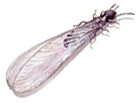 Our termite control division utilizes every tool necessary to eliminate termites from your house and property. By employing the latest baiting techniques we complete the job with little impact on the environment.
See More

Bed Bugs are back with a vengeance! It takes a professional company with extensive experience to eliminate these pests from your home. Eliminex Pest Control uses every tool at our disposal to rid your property of these annoying pests.
See More
Stinging Pests Services Bees Wasps Hornets
Eliminex Pest Control Inc. can eliminate stinging pests from your home and structures in your yard such as sheds, decks, playgrounds and gazebos. Eliminex always chooses the most environmental or “Green Pest Control Solution” as possible. All stinging treatments are backed by our 100% customer satisfaction guarantee!
Yellow Jacket Information:
Yellow Jackets (Vespula sp.) are probably the most common stinging pest Long islander's may encounter with possibly the exception of the paper wasp. Yellow Jacket queens overwinter in structures like attics and sheds or inside logs and tree holes. The queens emerge during the warm days of spring and look for suitable nesting locations. Yellow Jackets typically nest below ground or in some type of protective structure like hollow trees or in wall voids of homes. The queen establishes a small paper cone nest by herself and the nest grows slowly for several weeks. The queen will not leave the nest once the nest is established with there are enough workers. The nest will grow exponentially as the season progresses until it peaks between August and October. Yellow Jackets tend to be more aggressive during the later part of summer and into early fall as the yellow jacket population reaches their peak. The nest will eventually die off in late fall to early winter and the new queens will leave the colony and overwinter in suitable locations.
Yellow Jackets are attracted to sweets (soda and juices) and proteins (hamburgers and hot dogs) and they can be a big nuisance at late summer and early fall activities such as bar-b-q’s and sporting events. It is very common for the Yellow Jackets to go unnoticed all summer and then all of a sudden they break through the ceiling sheet rock and fill a room with Yellow Jackets. It is best to let a license professional exterminator handle yellow jacket problems as their nests can be quite large and difficult to treat. If you are allergic to bee stings do not attempt to handle a Yellow Jacket nest on your own as their stings are painful and can be lethal if you are allergic.
Hornet Information:
Hornet (Vespa Sp.) nesting, biology and overwintering characteristics are very similar to that of yellow jackets although their nests are usually found above ground in large gray paper cones. Hornet nests are usually exposed unlike yellow jackets whose nests are usually concealed. These nests are most commonly located in trees and shrubs but occasionally hey will be found in building wall voids and under overhangs of structures. Hornets are aggressive and will readily sting to defend their colonies.
Nests start out small in the spring but rapidly increase in size as the queen adds more workers and the season progresses. Hornets are predators and mainly feed on other insects that they sting and gather for their colonies. The most common species found on Long island is the Bald Faced Hornet (Dolichovespula maculata) which is a black and white hornet with a white face. There are also yellow and black species of hornets and the rarely seen Giant European Hornet (Vespa crabro L.) on Long Island.
Paper Wasp Information:
Paper wasps or Umbrella wasps nests can be found somewhere on most homes or commercial buildings. Their characteristic honeycomb paper nests can be found under eaves, inside air vents, behind shutters or inside hollow fence posts. Paper wasp nests tend not to as large as hornet or yellow jacket nests however there are usually many nests within a property. Paper wasps are very quick to defend their territory and will sting aggressively if provoked. It is best to use a licensed professional to handle these types of nests especially towards the end of the season when nests are large.Carpenter Bee Information:
The carpenter bee is unique in that it burrows into wood timbers where it makes its home. Overwintering queens and kings emerge from their wood galleries in the late spring to mate and look for suitable nesting sites. They most commonly look for raw wood timbers that are thick enough for the carpenter bee to tunnel into. These timbers are typically fascia boards, deck railings, wooden playground equipment and wooden fences. Carpenter bees will hover above their bee holes and aggressively charge at you if you come near them. Even though they exhibit this behavior they rarely sting.
The queen carpenter bee chews a perfectly round hole into the wood then turns and burrows about 12 inches or so down the grain of wood. The queen collects pollen and places about 12 pollen balls inside the wood gallery. She lays and egg inside each pollen ball which the larvae feed on during their development. You typically see a yellow to brown streak below each bee hole where the queen has dropped pollen while climbing into the bee holes.
There is usually one brood per year however there can be two if they get an early spring start. Carpenter bees will continually re-infest the same pieces of wood and the same structure year after year so it is important to treat the problem as soon as it is detected. One bee nest this year will probably be 12 potential bee nests next year. Occasionally the wood becomes so damaged that it will require replacing as opposed to treatment. It is also advised to paint or solid stain the wood to discourage the carpenter bees from nesting. Make sure you paint all sides of the wood because they will find the exposed wood especially behind fascia boards and under deck railings.
Miscellaneous Stinging Pests:
There are many more species of stinging pest that you may encounter on Long Island such as Bumble Bees, Honey Bees, Digger Bees, Digger Wasps, Cicacda Killers and Mud Wasps.
Honey Bees (Apis mellifera) : We always refer a beekeeper for Honey Bees whenever possible. Honey bees are endangered and are extremely important to our agriculture industries. The only time we treat for honey bees is if they are in an area that a beekeeper cannot reach them or they are an eminent threat to people.
Digger Bees, Digger Wasps and Cicada Killers: These are all solitary stinging pests that nest in the ground usually in sandy spots. They do have the ability to sting but rarely do. For the most part they are beneficial and are predators of other insects. They do tend to scare people when they nest closely together or in areas such as playground and golf courses.
Mud Wasps and Mud Dauber Wasps: These wasps are also not aggressive and pose little threat of stinging. Their mud nests in large numbers can be a visual nuisance.