

 Eliminex pest Control Inc. is dedicated to environmentally responsible pest control practices. Our seasoned professionals use extreme caution around your family and property while insuring positive results. See More
 The commercial marketplace is where our pest control technicians experience and expertise shines through. Eliminex Pest Control technicians have the necessary knowledge, desire and pride to do the job right the first time!
 See More
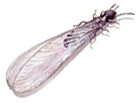 Our termite control division utilizes every tool necessary to eliminate termites from your house and property. By employing the latest baiting techniques we complete the job with little impact on the environment.
See More

Bed Bugs are back with a vengeance! It takes a professional company with extensive experience to eliminate these pests from your home. Eliminex Pest Control uses every tool at our disposal to rid your property of these annoying pests.
See More
The Black Carpenter Ant
Scientific Name: Camponotus pennsylvanicus
Eliminex Pest Control Inc. performs extremely thorough carpenter ant treatments designed to identify and eliminate all the nests that may be in your house or on your property. We utilize state of the art equipment such ULV Actisol machines, moisture meters and the latest Carpenter ant baits to eliminate the colonies quickly and completely. As always our carpenter ant treatments are guaranteed for a full one year and can be renewed each year at a lower cost. Please call for a free no obligation carpenter ant inspection.
Appearance: Carpenter ants are polymorphic meaning they come in different sizes called major and minor workers. The worker ants range from 1/4" to 5/8" long for the workers and up to 1/2" to 1" for the reproductive's . The queen ants are larger than the male reproductive's and the female's head is wider than the thorax. The males head is narrower than the thorax. The most common species of carpenter ant on Long Island is dark black in color. There are some species that are red/brown to yellowish in color or they can be a combination of black and red.
Biology: Carpenter ants are social insects; which means they live together in colonies. A colony is made of king and queen reproductives and major and minor workers. Nests are usually started in mid spring through late summer and even into early fall. King and queen ants emerge from existing colonies and mate, after which the queen will search for a suitable shelter. The most common areas are listed below. At first the colonies are small with only a few minor workers. As the nests grow and mature both major and minor workers are produced. A mature colony will have several hundred to several thousand ants. Winged reproductive's are usually produced either during or after the second year. Swarming ants are sometimes confused with swarming termites see comparison.
Conducive Factors: Carpenter queens are drawn to areas that usually include moist wood such as leaky roofs or gutters, improperly caulked windows and doors, air conditioner frames, steady or intermittent plumbing leaks, dishwashers, washing machines, improperly caulked bathtubs, showers, sinks or improperly grouted tile showers are common nesting areas. Exterior common nesting areas include stored firewood in or near a structure, infested railroad ties, wood decks, overhanging tree limbs, hollow tree trunks and rotten stumps.
Damage: In nature carpenter ants hollow out the center of trees and stumps producing a network of tunnels in which they build their nest or colony. A telltale sign is a pile of saw dust at the base of a tree or stump. Indoors carpenter ants will hollow out and nest in the timbers of your home. This includes the timbers around windows, doorways, garage doors, wall studs and roof rafters. Carpenter ants will also nest in plywood that has separated from excessive moisture. If a carpenter nest is not found and eliminated quickly costly damage may occur.
Control: The first step in carpenter ant control is a thorough inspection in and around the structure. You want to inspect all areas that are conducive to carpenter ants from the ground level to the roof peak. Carpenter ants are most active at night. Sometimes an evening inspection is necessary to locate a difficult carpenter ant problem. The key to eliminating carpenter ants is locating the colony. This is often difficult as the carpenter ants usually locate their nest inside wall or ceiling voids where it is hard to get at. Also where carpenter ants trail into a building is not always where the main colony is located. Carpenter ants sometimes form satellite colonies where they enter and exit a structure. Satellite colonies are in between the main colony and food locations or swarming locations. The ants may enter at a location and then climb through walls and rafters to where the nest is really located. After the nest or entrance ways have been determined the wall or ceiling void may be drilled and treated to eliminate the entire colony. There are also several new ants bait products available which can also be used to locate and eliminate a nest.